Choose from 5 options:
This section records how the substance is classified and labelled for physical, human health and environmental hazards.
The classification and labelling information you enter in IUCLID (Section 2) is generally the same for all certificate application types
You must classify your chemical according to the Globally Harmonised System (GHS) and provide the relevant hazard information. This information is required for all application types and supports the assessment of risks to human health and the environment.
See Types of assessment applications and information required in the Guide to applying for an assessment certificate for a summary of information required for this section.
Create one document for each GHS record.
A GHS classification record includes all hazard endpoints for a substance or composition. You may need more than one record where classifications differ (for example, for different compositions such as UVCBs).
Use a clear and descriptive document name, including concentration, where relevant. For example, GHS classification of substance with more than or equal to 1% concentration.
You can flag CBI and restrict regulatory use (by jurisdiction) for each document.
Complete information under the following headings:
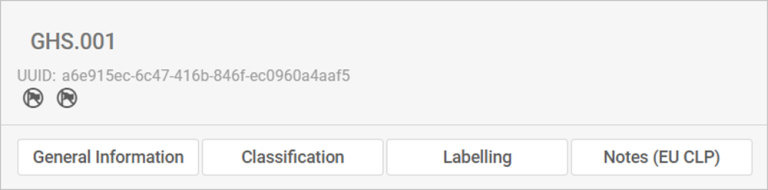
These fields must match – so the right hazard statement goes with the right category.
Important: Data lacking is selected by default under Reason for no classification, which deactivates Hazard category and Hazard statement. This setup reflects the reality that most of these hazard endpoints lack sufficient data for classification.
Remove Data lacking in Reason for no classification to activate these fields.
Complete all labelling fields, including:
Use this field to provide additional context or explanations.